
Sagrada Família legends: what's true and what's myth
Plenty of legends surround the Sagrada Família. Some are true, others grew out of a neat guess, and a lot of them you can check on the spot. We've looked at the eight stories you hear most often.
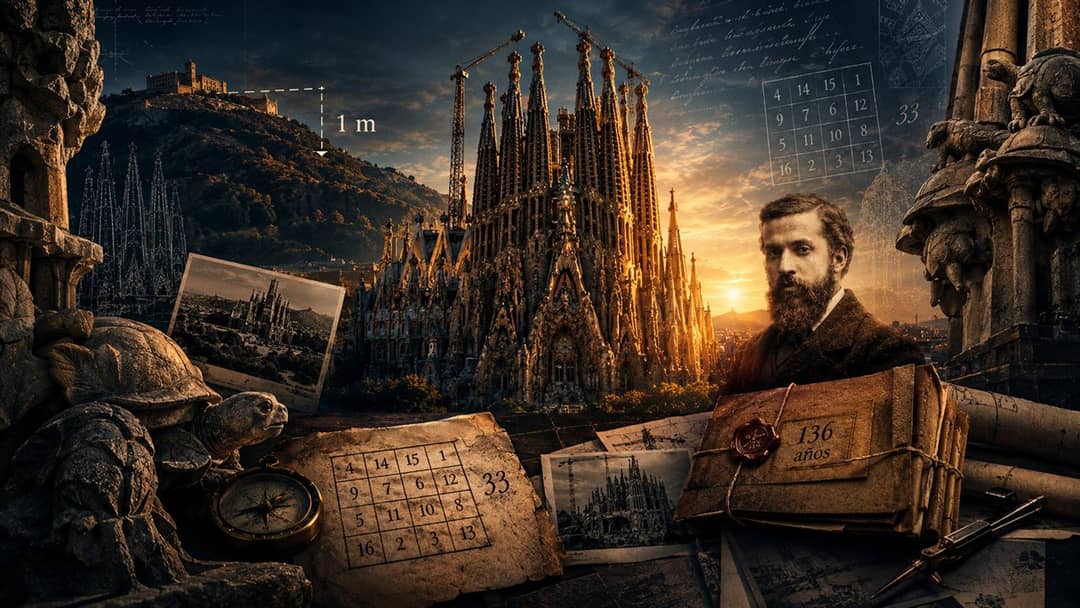
1. The tower is just one metre lower than Montjuïc
The story. Gaudí deliberately made the main tower one metre lower than Montjuïc, so that the work of man would not surpass the work of God.
The facts. The idea is real, but that famous one metre is made up. The Tower of Jesus Christ rises to 172.5 metres and the top of Montjuïc to 184.8 metres: a difference of about twelve metres, not one. The tower was completed in February 2026, and the Sagrada Família is now the tallest church in the world: the previous record holder, Ulm Minster, is about eleven metres lower.
Where to see it. The best view of it all is from the seafront and from Montjuïc itself: from there it's obvious that the hill is higher.
2. The magic square that always adds up to 33
The story. A square of numbers is carved into the Passion façade, and whichever way you add it up, you get 33, the age of Christ.
The facts. Every row and every column really does add up to 33. But the square isn't an original: it's based on Dürer's engraving "Melencolia I", where the total is 34, with some of the numbers reduced by one. It isn't considered a true magic square, because the numbers 10 and 14 each appear twice.
Where to see it. The Passion façade, next to the Kiss of Judas scene.
3. The basilica was built without a permit for 136 years
The story. Spain's most famous building site carried on with no paperwork at all.
The facts. That's right. Building started in 1882, a permit was applied for in 1885, but the city never answered the application. This only came to light in recent years. Ah, bureaucracy.
In 2018 the basilica and the city council reached an agreement: the basilica committed to paying the city €36 million for improvements to the neighbourhood. On 7 June 2019 the permit was finally granted, and the permit itself cost a further €4.6 million.
4. "My client is not in a hurry"
The story. When people asked Gaudí why the work was going so slowly, he replied that his client was in no hurry, meaning God.
The facts. Tradition attributes the line to Gaudí, but there's no documentary evidence for it. Still, it captures his thinking accurately: the architect deliberately worked on a timescale of centuries and knew he would not see the basilica finished.
5. Gaudí died because he was mistaken for a beggar
The story. The great architect was hit by a tram, but because of his shabby clothes nobody recognised him, help came too late, and he died.
The facts. True. On 7 June 1926 Gaudí was hit by a tram on Gran Via. He was shabbily dressed, carried no papers, and several taxi drivers refused to take him. It was a while before he was taken to a hospital for the poor. The Sagrada Família's chaplain recognised him only the next day. Gaudí died on 10 June and is buried in the basilica's crypt. In April 2025 Gaudí was declared Venerable, the first step towards beatification.
Where to see it. The crypt, where Gaudí's tomb is.
6. Turtles hold up the columns
The story. Stone turtles sit at the base of the columns by the entrance.
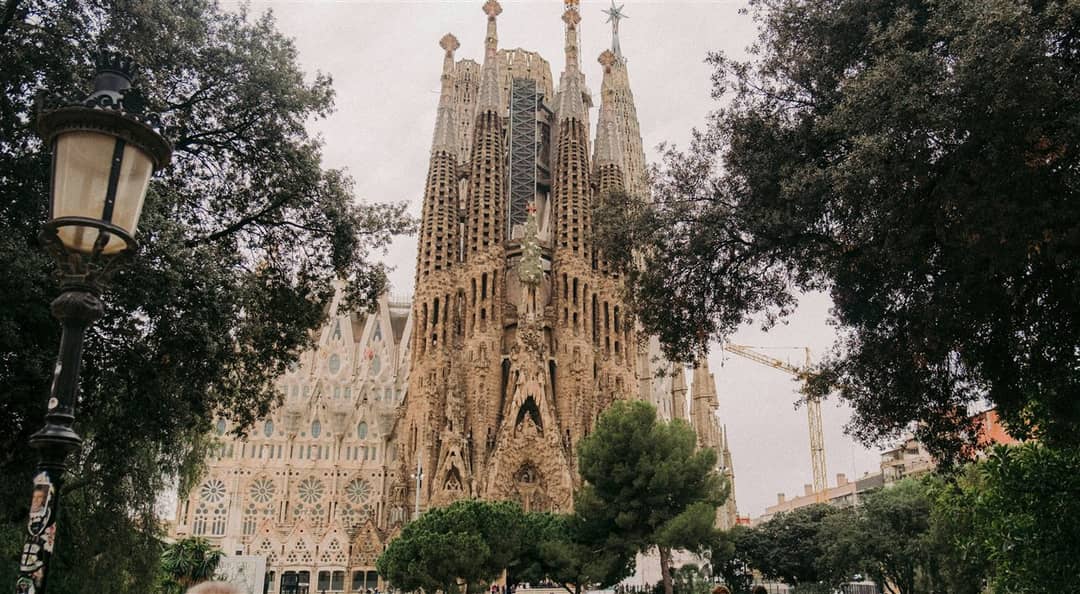
The facts. True, and there's a meaning behind it. At the foot of two columns on the Nativity façade stand a sea turtle and a land tortoise: one on the side facing the sea, the other on the side facing the mountains. For Gaudí they stand for permanence, while the chameleons at the edges of the same façade stand for the opposite, change.
Where to see it. The Nativity façade, at the base of the two columns by the entrance.
7. The Sagrada Família will never be finished
The story. The building work is endless and will never be done.
The facts. The basilica is paid for only by donations and ticket sales, with no government funding, so the pace of construction depends on visitor numbers. About seventy per cent is finished now. The Tower of Jesus Christ is complete on the outside, but work continues inside it, along with the chapel of the Assumption, the second sacristy and the Glory façade. The basilica doesn't give a firm completion date, and we won't either.
8. The stone for the basilica comes from England
The story. The Sagrada Família is being finished with English stone.
The facts. True. The Montjuïc quarry where the stone used to come from closed long ago, and since 2018 some of the stone has come from Brinscall quarry near the village of Withnell in Lancashire. Choosing the material took a long time: the stone had to be the same colour and the same strength.
Tickets: book ahead, and only on the official website
This isn't a legend: it's the main reason a day in Barcelona goes wrong. Sagrada Família tickets sell out well in advance, and you almost certainly won't get one a couple of days before. We checked official ticket sales on 29 October 2026: the earliest available date was two weeks away.
- Book about a month ahead, and even earlier for public holidays and school holidays. A ticket is always for a specific day and a specific entry time.
- Buy only on the basilica's official website, sagradafamilia.org, or in the official Sagrada Família app. Tickets with tower access are sold there too, and they sell out fastest.
- Don't buy from resellers or random websites. Photo ID is checked at the entrance, and you won't be let in on a ticket in someone else's name. You won't get your money back for a ticket like that.
- Arrive on time for your slot. Entry is strictly at the time on your ticket.
If you only have one day in the city, say you're coming off a cruise ship, it's worth working out the travel time in advance: a transfer from the cruise port to the city centre takes ~20 min, the driver meets you at the port and waits free of charge for 60 minutes from when the ship arrives, and you see the price before you book.
If your flight lands at Girona airport, Barcelona is 91 km away, ~1 hr 11 min on the road. You can check the price on the Girona airport to Barcelona transfer page.
If you'd like to fit in Casa Batlló, La Pedrera and Park Güell on the same day as well, it's easier to book a car with a driver by the hour (minimum three hours): the driver waits for you at each stop, so you don't have to find a new car every time.
Frequently asked questions
Is it true that the Sagrada Família tower is lower than Montjuïc?
Yes, but not by one metre, as the story usually goes. The Tower of Jesus Christ is 172.5 metres, the top of Montjuïc is 184.8 metres, a difference of about twelve metres. Gaudí's idea is real, though: the building was not meant to rise higher than the hill.
What does the number square on the Sagrada Família façade mean?
The numbers in every row and every column add up to 33. This is generally taken to be the age of Christ. The square itself is adapted from a Dürer engraving where the total is 34.
How far in advance should Sagrada Família tickets be booked?
About a month, and earlier for public holidays and school holidays. A ticket is valid for a specific day and time. We checked official ticket sales at the end of October: the earliest available date was two weeks away.
Can Sagrada Família tickets be bought from resellers?
Not a good idea. Photo ID is checked at the entrance, and nobody gets in on a ticket in someone else's name. Tickets should be bought on the basilica's website or in its official app.
Is the Sagrada Família finished?
No. About seventy per cent is complete. The outside of the Tower of Jesus Christ was finished in 2026, but work inside continues, as does construction of the Glory façade. The basilica has not announced a firm completion date.
How long does it take to get from Barcelona airport to the city centre?
A transfer from Barcelona airport to the city centre takes ~24 min, and the price is from €32 per car, known before you book.