
Why do Catalan children beat a log at Christmas?
Christmas Eve in an ordinary Barcelona flat. In the middle of the room lies a log with a painted smile and a little red hat, surrounded by children holding sticks. They whack the log and sing a song at the top of their voices. Then one of the grown-ups lifts a blanket, and underneath: sweets.
The log is called the Tió. It's the best-known Catalan Christmas tradition. And trust us, it's far from the strangest.
The Tió: a log you have to feed
The Tió (Tió de Nadal) is a wooden log on legs, with a painted face and a red Catalan cap, the barretina. It turns up in homes at the beginning of December. Every evening the children "feed" it: they leave some bread or a mandarin next to it and cover it with a blanket so the log doesn't get cold. The sort of devotion usually reserved for the family pet.
What all this is for becomes clear at Christmas. The children beat the Tió with sticks and sing a song asking it to... poo out presents. Yes, you read that right. The ritual is even called that, caga tió, and we couldn't find a polite way to translate the name. Under the blanket they find sweets and turrón. The last thing the Tió "produces" is often a herring or a head of garlic. That's the signal: no more presents, show's over.
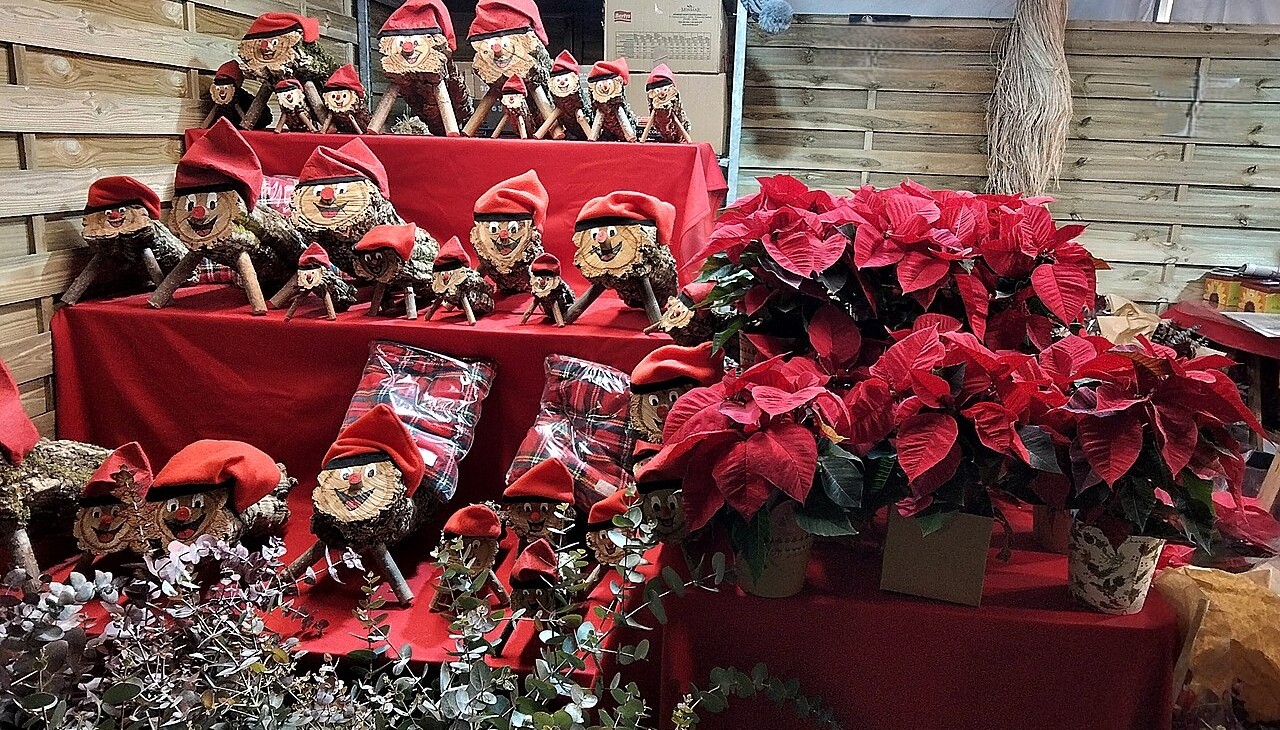 If no Catalan family invites you round, you can see Tiós of every size at the Christmas market in front of the cathedral.
The caganer: who's that in the corner of the nativity scene
Many Catalans set up a nativity scene at home, the pessebre: the manger, the Holy Family, shepherds, the Three Kings. All very proper and dignified. Then you look more closely and spot, in a corner behind a bush, a peasant in a barretina with his trousers down. This is the caganer, and the name tells you exactly what he's up to. Catalans don't find him rude in the slightest. According to one version, the caganer fertilises the soil so that the next year brings a good harvest. A practical approach. Stop by the caganer stall at the market, where they sell figurines of famous footballers and politicians: you're bound to find someone you recognise there, and maybe a present for a friend with a sense of humour.
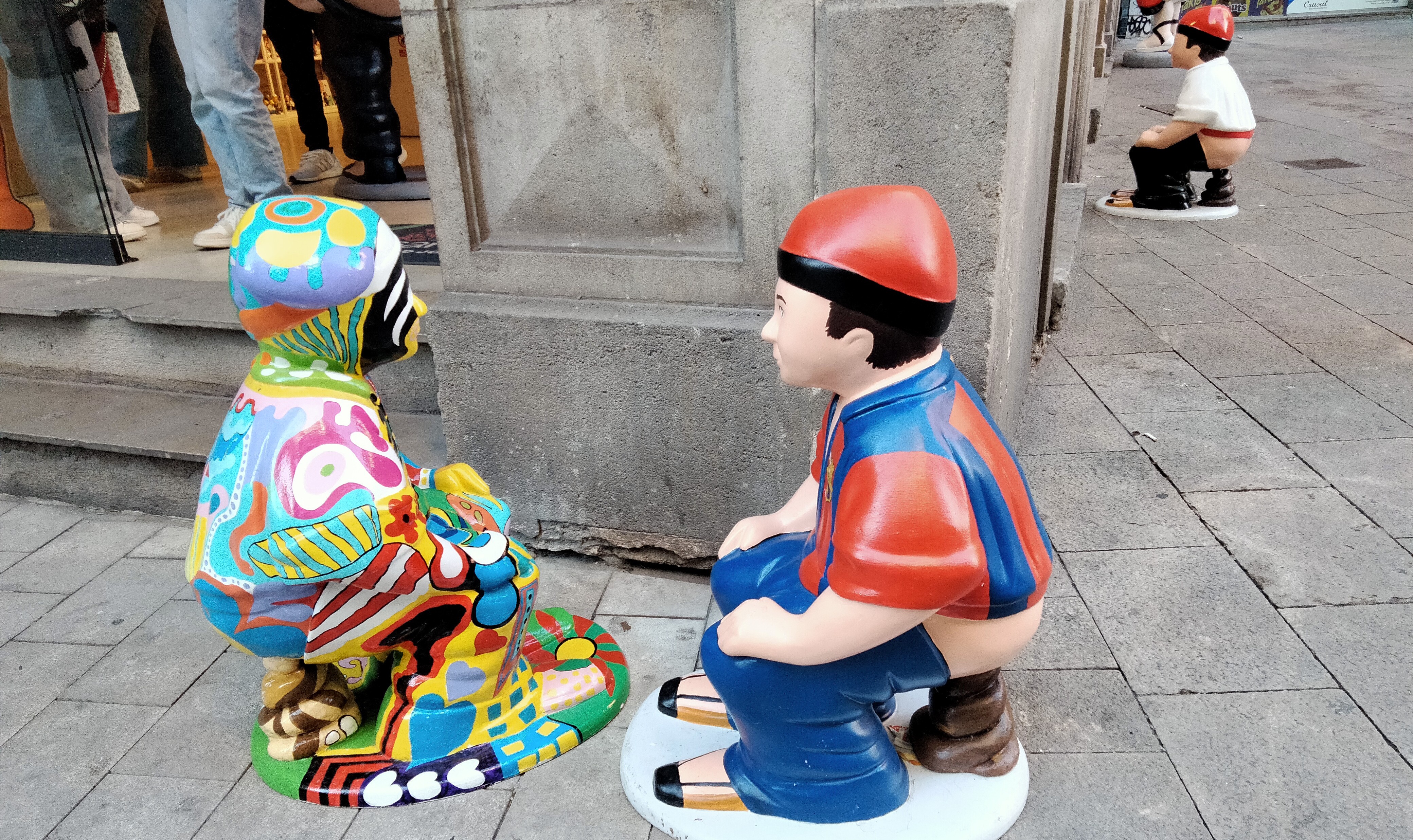
The market by the cathedral
The Fira de Santa Llúcia is held in front of Barcelona Cathedral. The first record of it dates from 1786. Let that sink in: 1786. The 2026 dates have not been announced yet; in 2025 the market ran from 28 November to 23 December. Here you can buy figurines and moss for the nativity scene, Tiós of every size and, of course, caganers to suit every taste. Our tip: go on a weekday evening. The lights are already on, it isn't crowded, and you can wander between the stalls at your own pace, like in a Christmas film.
26 December: cannelloni day
In Catalonia 26 December is also a holiday, Sant Esteve. For lunch people make cannelloni, stuffed with the meat left over from the Christmas soup, escudella. Yesterday's soup becomes a new festive dish, which, frankly, is genius. Remember The Godfather? "Leave the gun. Take the cannoli." In Barcelona on 26 December the rule is the same, only with cannelloni instead of cannoli: on this day they're on the menu at many restaurants.
6 January: presents from the Three Kings
Many Spanish children get their main presents not at Christmas but on the morning of 6 January, and it is the Three Kings who bring them. Children write their letters to the Kings in advance, and on the evening of 5 January they welcome them at the Cavalcada de Reis parade, where sweets fly from the floats into the crowd.
On 6 January people bake the tortell, a ring of sweet bread dough with marzipan. Baked inside are a small figurine and a bean. Whoever gets the figurine is king for the day. Whoever gets the bean traditionally pays for the tortell. A crown or the bill: a lottery in every slice.
We've covered how transport runs on these days and which streets are closed in our article on Christmas and New Year in Barcelona.
Travelling with children
A child seat in a transfer from the airport to central Barcelona is free: just select it when you book. The price is fixed at booking and does not go up over the holidays. Staying in Sitges or in Andorra rather than in Barcelona? We do airport transfers there too. Tips for flying with little ones are in a separate article.
You can book in the app or on the website.
Frequently asked questions
What is the Tió in Catalonia?
The Tió is a Christmas log with a painted face and a red cap. In December children "feed" it, and at Christmas they beat it with sticks and sing a song, then find sweets and presents under the blanket.
What is the caganer in a Catalan nativity scene?
The caganer is a figurine of a peasant with his trousers down, placed in a corner of the Catalan nativity scene. According to one version, he brings a good harvest. These days caganers also come in the likeness of famous people.
When is the Fira de Santa Llúcia Christmas market in Barcelona?
The market is held in front of Barcelona Cathedral, usually from late November to 23 December: in 2025 it ran from 28 November to 23 December, and the 2026 dates have not been announced yet. The market is first mentioned in 1786.
What do people eat in Catalonia on 26 December?
On 26 December Catalans eat cannelloni filled with the meat left over from the Christmas soup, escudella. 26 December, Sant Esteve, is a public holiday in Catalonia.
When do Spanish children get their presents?
Many get their main presents on the morning of 6 January, from the Three Kings. The evening before, on 5 January, the Three Kings parade takes place in Barcelona.
Photos: Enric, Wikimedia Commons, CC BY-SA 4.0