
Calçotada in Valls: why Catalans eat onions with their hands
A Sunday in January, the courtyard of an old farmhouse outside Tarragona. Every guest is tied into a bib the size of an apron. The waiter brings out a roof tile piled with charred green onions. The people next to you grab one by the tail and strip the blackened skin off it. Then they dip it in an orange sauce, tip their head back and lower the onion into their mouth. Ten minutes later everyone is covered in sauce up to the elbow. That is a calçotada.
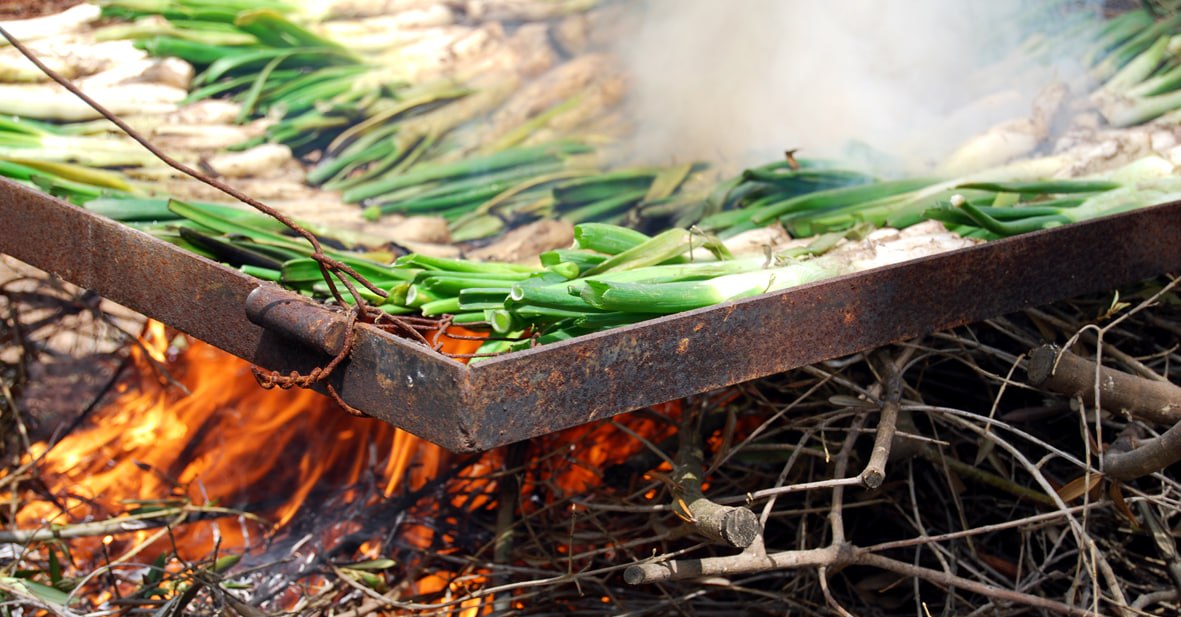
For us it's the best thing Catalonia has to offer in winter. Though we'll admit it: the first time round, the whole business looks pretty odd.
What a calçot is
A calçot is a green onion, long and faintly sweet. While it grows it is earthed up several times, so the white part of the stem stretches out. Hence the name: to earth up is calçar in Catalan.
The calçotada was born in Valls, in the province of Tarragona, where it has been held since the end of the 19th century. Calçots from there carry the European quality mark IGP Calçot de Valls: those bunches are tied with a blue ribbon showing the grower's number.
How you eat them
Calçots are roasted over an open fire until they turn black. Once they are done they are wrapped in newspaper or laid out on a roof tile so they finish softening and stay hot. You pull the charred skin off with your hands, and underneath there is a soft white core. You dip it in the calçotada sauce, made of tomatoes, nuts, garlic and sweet pepper, and eat it holding the onion above your head.
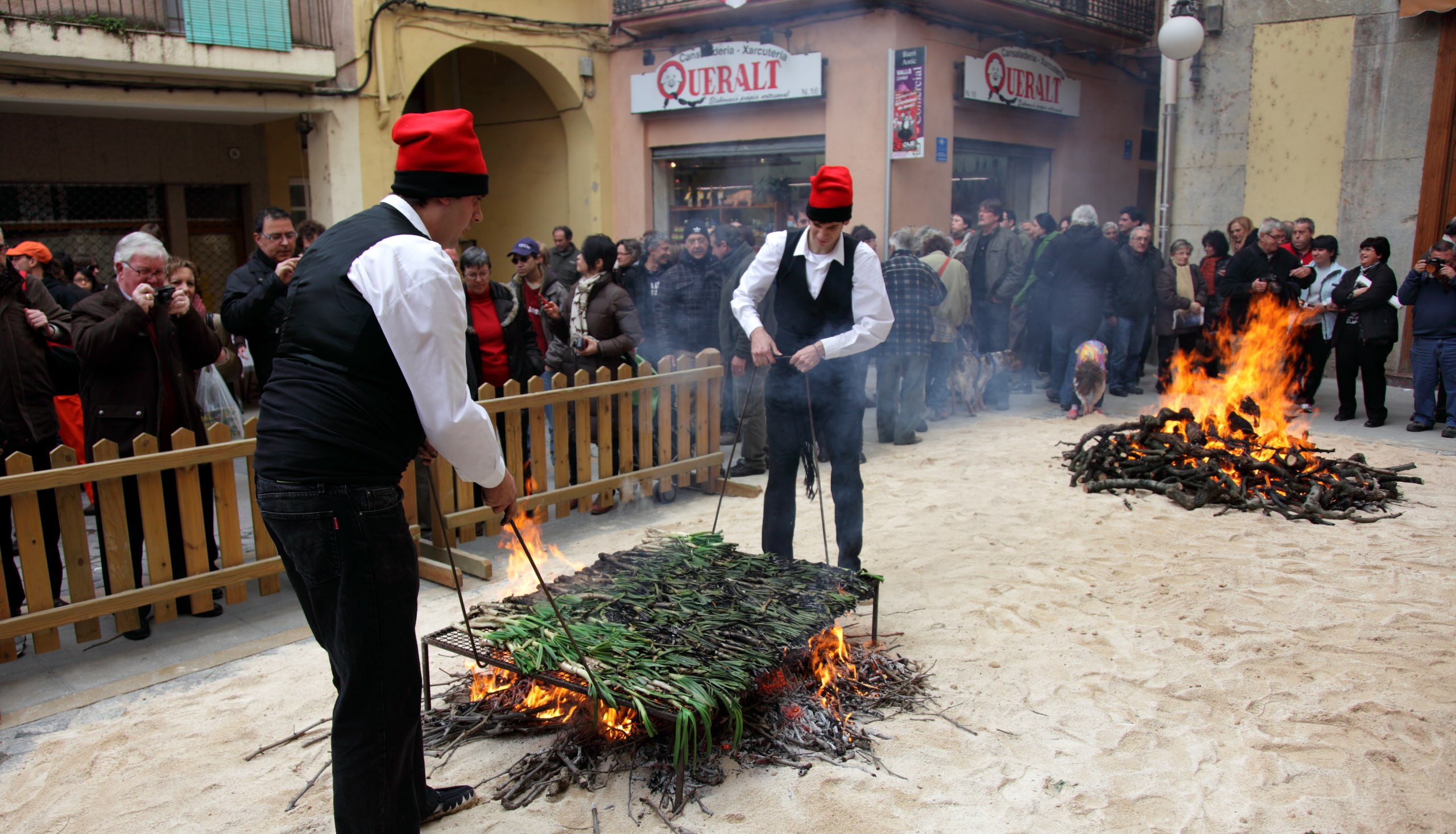
The onions are only the beginning. Next come grilled meat and sausages, and sometimes crema catalana for dessert. The wine is drunk from a porró, a glass jug with a long spout. You hold it up high and pour a thin stream straight into your mouth. Nobody manages it first time, and the whole table howls.
Better not to wear anything light-coloured to a calçotada: the bib doesn't save you from everything.
The season and the festival in Valls
Calçotadas are held from November onwards, but the real season starts at the end of January and runs until April. It opens with the Gran Festa de la Calçotada in Valls. The festival falls on the last Sunday in January.
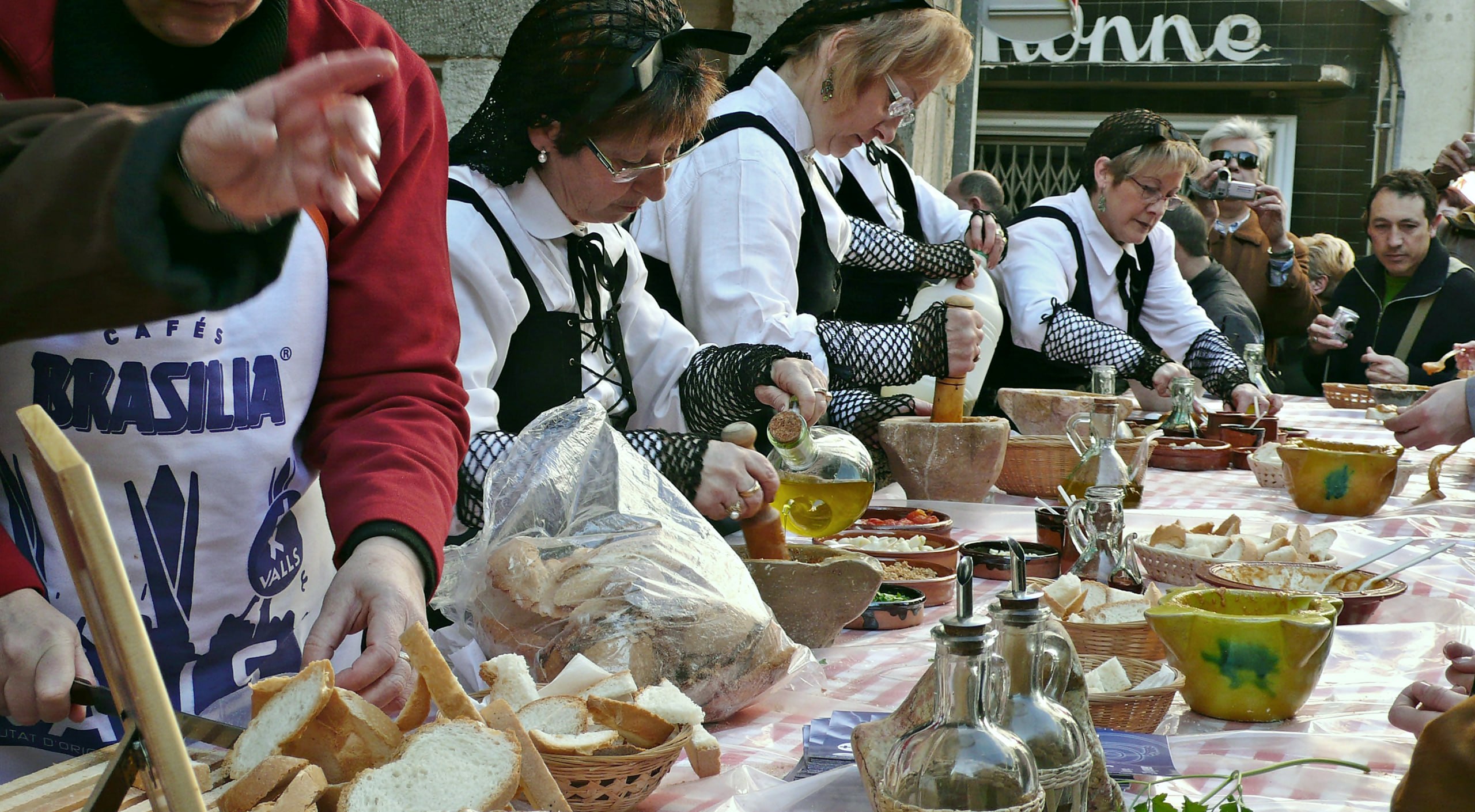
The festival has been running since 1982, and in a single day more than 35,000 people come to Valls. In the morning a parade of giants moves through the old town, then the best sauce and the best crop are chosen. The biggest crowd of all goes to the calçot-eating contest. Afterwards everyone is invited to the communal tasting.
The festival is worth seeing at least once, but a quiet lunch there is out of the question: there are simply too many people. Here is what we would do: watch the parade in the morning, then head out for lunch at a masia, a restaurant in a Catalan farmhouse out in the countryside. You can sit there until evening, the way the Catalans do it themselves. Just book your table for that day well in advance.
Who is driving back
Lunch at a calçotada stretches on into the evening. All that time there is wine and cava on the table, and the porró is passed from hand to hand. Getting behind the wheel after that is out of the question, legally and by plain common sense. On top of that, many masias sit outside town, where no buses run.
So the Catalans agree in advance on who isn't drinking that day, or they travel with a driver. A transfer from Barcelona to Valls takes about ~1 hr 16 min and costs from €191 per car. If you're travelling as a big group, take a Van: it seats up to seven, and the price per car is split between everyone.
Want the festival in the morning, a masia in the afternoon and home in the evening? Then hiring a car with a driver by the hour works better: the driver waits while you have lunch and takes you wherever you ask.
A child seat is free, just tick it when you book. You can book in the app or on the website. The amount is held when you book and charged after the ride. Tolls are not included in the price.
Frequently asked questions
What is a calçotada?
A Catalan feast built around calçots, sweet green onions. They are roasted over a fire, peeled by hand and dipped in sauce. After the calçots there is usually grilled meat.
When is calçot season?
Calçotadas are held from November, and the main season runs from the end of January to April.
When does the calçotada festival in Valls take place?
On the last Sunday in January. The organisers announce the exact date on the festival website.
How do you eat calçots?
You pull the charred skin off with your hands, dip the core in the sauce and eat it holding the onion above your head. Guests are usually handed a bib.
How do I get from Barcelona to Valls for a calçotada?
With a driver is the easiest way: after a long lunch with wine you cannot drive. A transfer from Barcelona to Valls takes ~1 hr 16 min, and the price is fixed when you book.